HOWDY!
I'm Meg, a market researcher living in Austin, Texas — now in my 10th year here.
The other day, I rode Tesla's self-driving taxi, Robotaxi, in downtown Austin.
When I arrived at my destination and got out, a screen popped up asking for a tip — but it was fake. When I selected a tip, the screen switched to "Just Kidding!"
Of course, there's no driver, so it makes sense. But in that moment, I felt a strange sense of relief.
"Oh, right. Tipping really is something I've been stressing about this much."
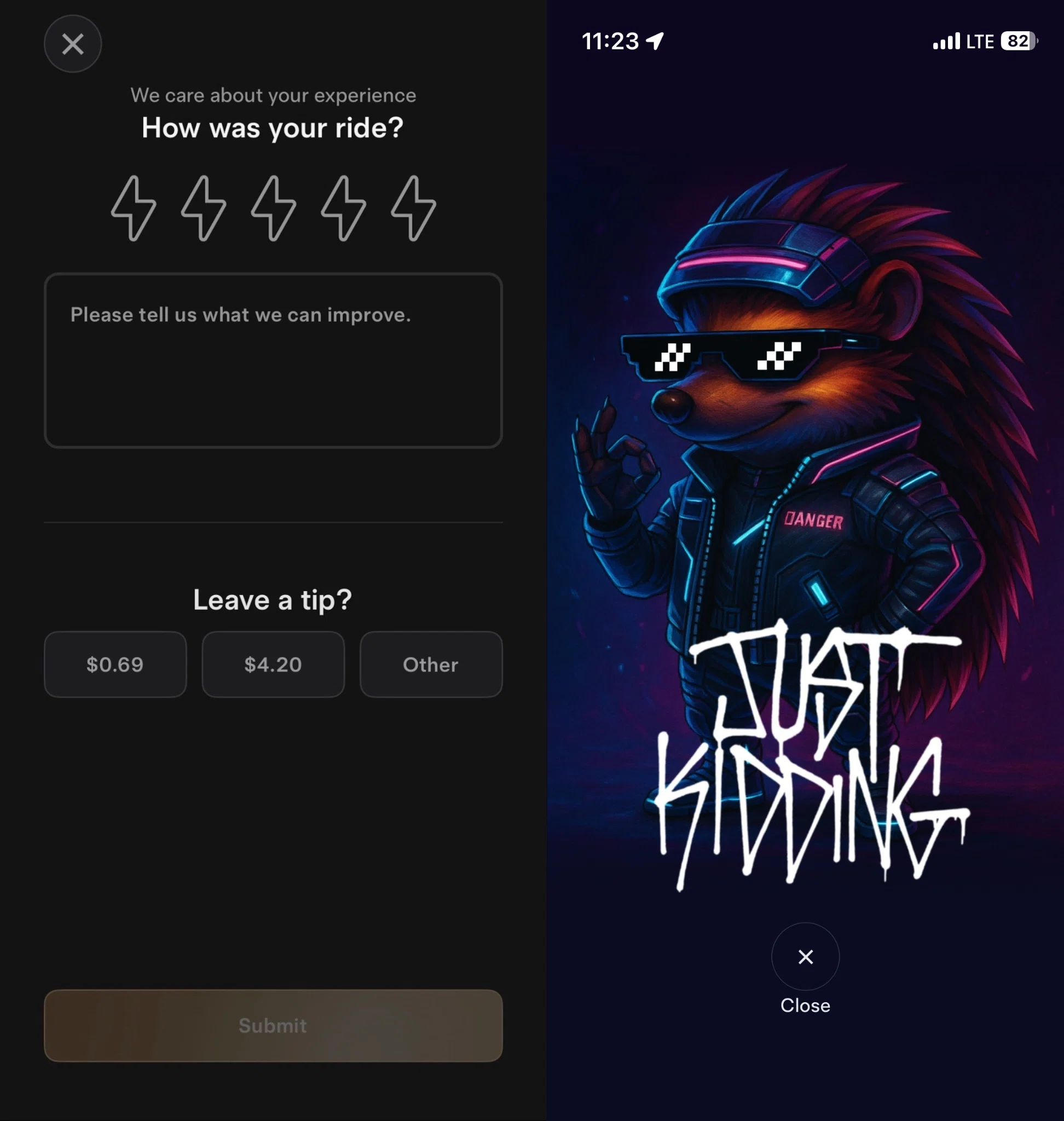
When you select a tip (left), the screen switches to "Just Kidding" (right)
That feeling of relief in the Tesla Robotaxi is what inspired me to write about the "tip fatigue" happening across America right now.
What Is "Tip Fatigue"?
In the past, tipping in America was mostly a gratuity for restaurants and hotels. But in the 2020s, with the spread of digital payment terminals, the number of situations where you're asked to tip has skyrocketed.
At self-service bakeries, coffee takeout counters — at almost every checkout, a "Tips?" screen appears. Tipping, which used to be a gesture of gratitude handed directly to a person, has started to feel like a tax you're obligated to pay.
In the US, you'll often see this psychological exhaustion referred to in the media and on social media as "Tip Fatigue." According to a Pew Research Center survey, about 72% of Americans say tipping culture has gone too far.
Payment Terminals Are Driving the Change
You go to a café and order a latte to go.
You press the buttons on a tablet yourself and pick up your order.
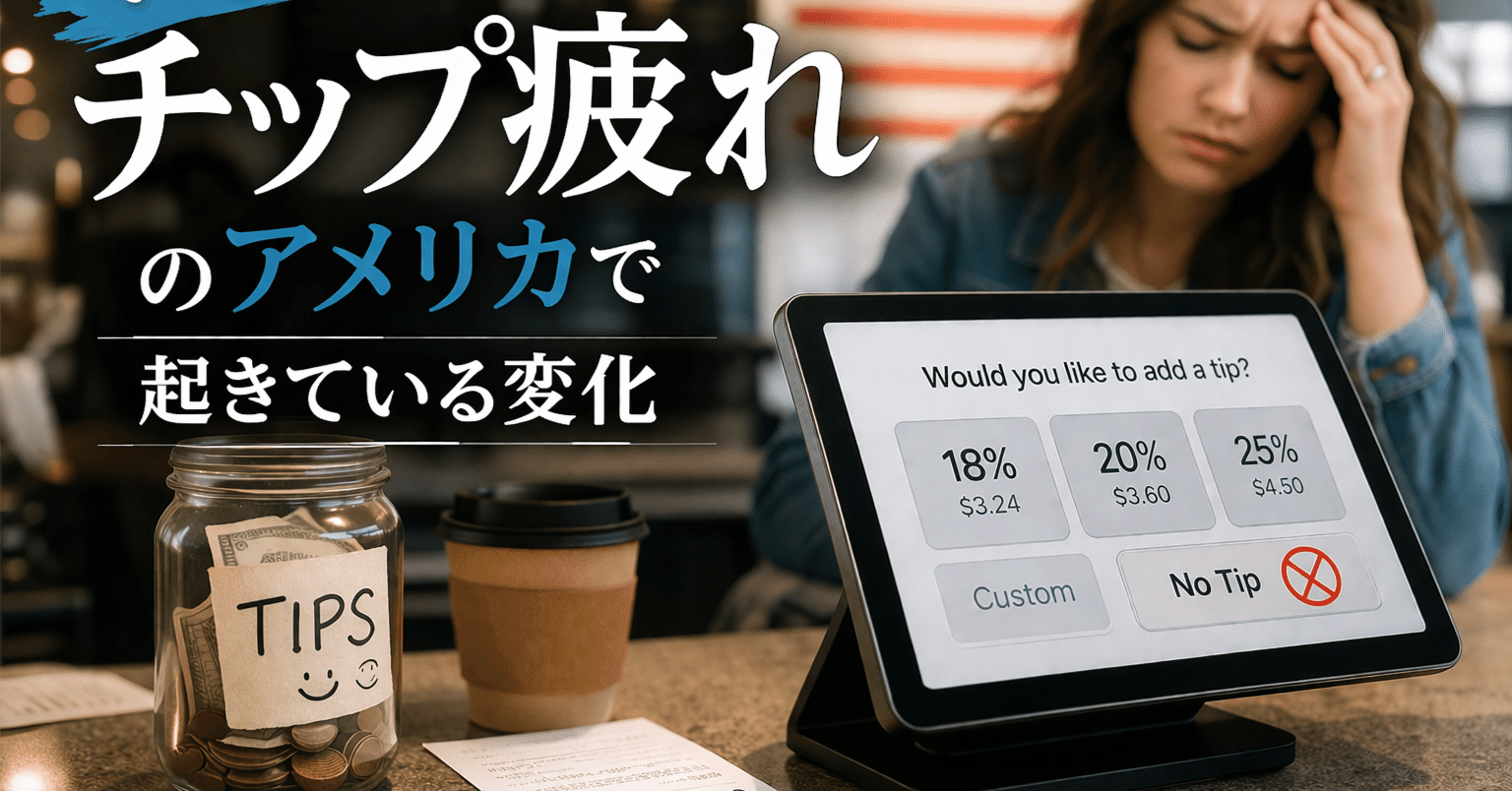
Even with zero interaction with staff, the terminal shows "18% / 22% / 25% / Custom / No Tip." The awkward moment is when the cashier spins the terminal around to face you and you have to choose a tip right there in front of them. It takes quite a bit of courage to press "No Tip" just because it's takeout.
Japan doesn't have a tipping custom to begin with. Coming from a culture where prices are transparent and you know exactly what you'll pay in advance, tipping culture can often be confusing.
A custom born of goodwill can turn into something that feels like an obligation as technology changes — that's what I found myself thinking while riding in a driverless taxi.
Tipping Guide by Situation 2026
For those traveling or staying in the US, here's a summary of typical tipping amounts by situation as of 2026. These are simply my own personal guidelines and may vary by region and business.
🍽️Restaurants (table service) 18–25%
Based on the pre-tax amount. For dine-in, 20% seems to be the average. For large groups (6–8 or more), a gratuity may be added automatically.
🥡Takeout / counter orders 10–15%
For takeout, tipping is not mandatory. However, the reality is that it's psychologically hard to press "No Tip" when the payment screen is turned toward you.
🛵Food delivery 15–20%
Set in the app when ordering on services like Uber Eats or DoorDash.
🚗Rideshare (Uber / Lyft) 15–20%
Usually paid in the app after you get out. If the driver helps load and unload luggage, such as on airport runs, I tip more. For autonomous vehicles, no tip is needed.
🏨Hotels $2–5 per night
Since housekeeping staff change daily, I leave cash every morning rather than all at once at checkout. For valet parking, tip when you pick up your car.
✂️Hair salons / nails / massage 20%
For skilled services, tip based on the total of the services received.
About Pathway Connect
Based in Austin, Texas, we provide American market research and local guide services. Our strength lies in delivering real-time research and trend information tailored to local needs.
We can deliver raw, on-the-ground trend and research insights from the US. Feel free to contact us!